
RHWCH: Unlocking the Lifecycle for Retired Wind Turbine Blades
As wind power installations skyrocket year after year, a long-overlooked challenge is bubbling to the surface: early-generation wind turbines are rapidly reaching the end of their lifespan. Where will this massive wave of retired blades go?
Beijing RHWCH Holdings Co., Ltd. has addressed this by establishing a closed-loop supply chain that spans the entire industry. They transform this "hard-to-process waste" into heavy-duty, corrosion-resistant, and 80-times-recyclable green packaging. This innovative process has also earned them the world’s first carbon footprint certification for recycled wind blade pallets.
Instead of treating retired blades as trash, RHWCH views them as high-value raw materials, seamlessly reintegrating them into the circular packaging economy.
RHWCH first entered the packaging sector in 2005 and began pioneering the recycling of retired wind turbine blades around 2018. Over the years, the company has successfully integrated blade recycling, equipment R&D, circular packaging manufacturing, and asset operations.
This complete ecosystem is exactly what sets RHWCH apart from standalone recycling firms or traditional packaging companies. The company does not focus merely on the isolated step of "how to recycle the blades", but on how these recycled materials can be continuously and productively utilized afterward.
How to Recycle a Turbine Blade?
To truly integrate retired blades into a circular lifecycle, the primary question is not "what product to make", but rather where the raw materials come from, how they are collected and processed, and how they seamlessly transition into the next stage of the value chain.
To address this, RHWCH has extended its business upstream to establish its own comprehensive recycling and processing infrastructure:
1.Systematic Sourcing: One of the company’s subsidiaries established across Northwest, Northeast, North, and East China, it has recycled and processed over 10,000 tons of waste to date, serving top-tier energy giants and securing a stable, reliable supply of raw materials right from the source.
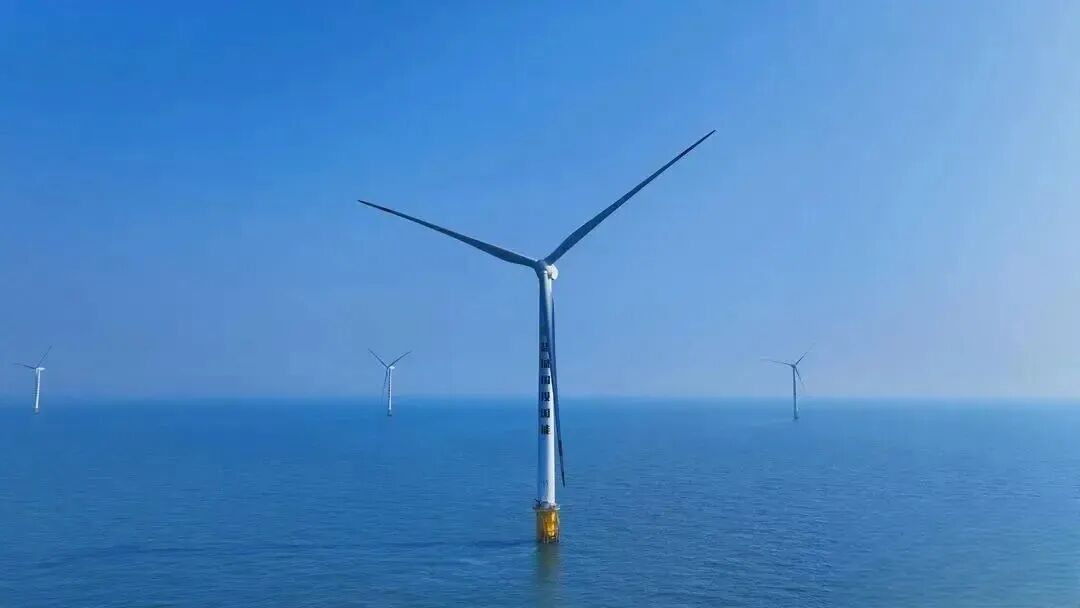
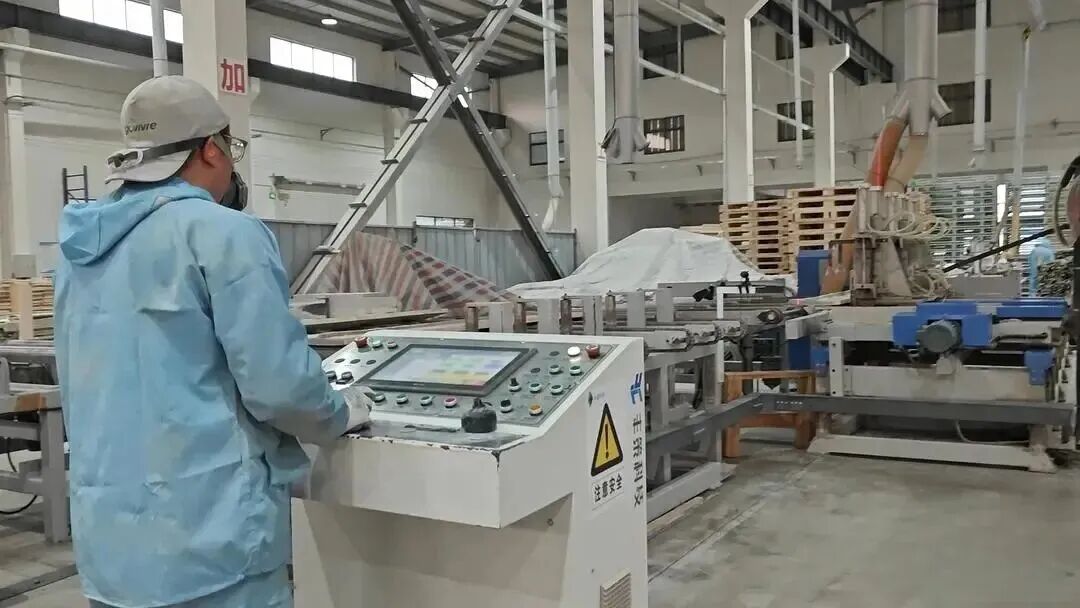
2.Proprietary Technology: Through collaborative R&D, RHWCH developed China’s first intelligent processing line for retired blade profiles. This line boasts an annual capacity of 3,500 tons per single line. The company has already delivered a 10,000-ton turnkey production line. Furthermore, the modulus of rupture (MOR) of their recycled blade composite-reinforced particleboard reaches 34.2 MPa—exceeding national standards by 71%—and is backed by nearly 100 patents.
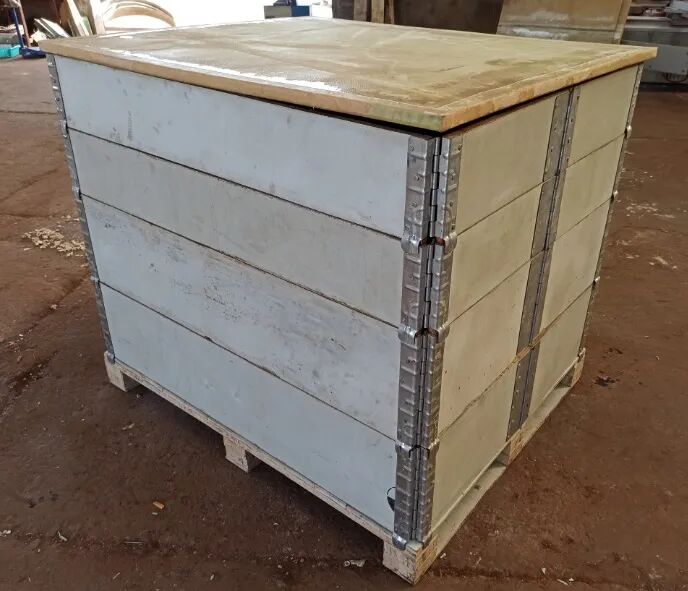
3.Scalable Application: One of its subsidiaries launched a series of circular pallets. This product received the world’s first carbon footprint declaration certificate, boasting a lifecycle carbon footprint of just 5.723 kg CO₂e—a 67% reduction compared to traditional wooden pallets—with a lifespan of 5 to 10 years. To date, over 100,000 circular packaging units have been manufactured, capturing a market share of over 40% in the wind power fiberglass packaging sector
4.Intelligent Operations: Its smart logistics arm utilizes a self-developed IoT management platform and AI dispatch algorithms to pioneer an integrated "Transportation & Packaging" business model. This enables full-lifecycle traceability and dispatching of packaging assets. Te company provides a one-stop green supply chain solution encompassing "packaging + leasing + recycling + data services", successfully closing the "recycling – equipment – product – operation" loop.
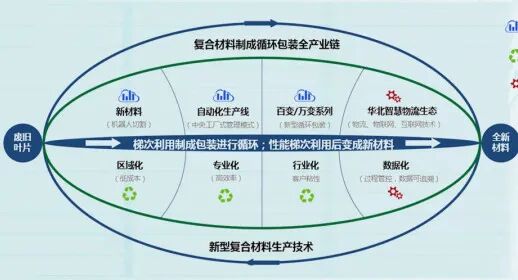
A systematic approach to recycling, proprietary technology, scalable applications, and digitalized operations—these four interconnected pillars form the core competitive moat that differentiates RHWCH from standalone recycling firms or traditional packaging companies.
Blade recycling is merely the first step; the true value lies in continuously feeding the reclaimed materials into the next industrial production chain.
From Turbine Blade to Circular Pallet
Where do retired turbine blades go once they have been successfully recycled and processed? RHWCH chose a clear direction: circular packaging.
The company’s heavy-duty circular pallet series is remanufactured using retired wind turbine blades as its primary raw material. Its lifecycle carbon footprint is just 5.723 kg CO₂e—roughly two-thirds lower than a wooden pallet of equivalent performance. It features a design lifespan of 10 years and can be reused up to 80 times.
This is the world's first recycled wind blade pallet to be awarded the "Product Carbon Footprint Declaration Certificate for Recycled Wind Turbine Blade Circular Pallets".
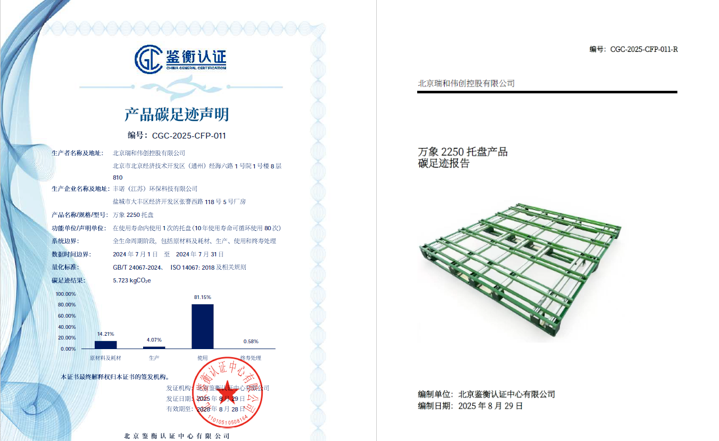
Product advantages:
1.High Load Capacity: Its fiberglass composite structure delivers a load-bearing capacity that far exceeds ordinary wooden pallets.
2.Extended Lifecycle: With a 10-year design lifespan and an 80-cycle durability, the cost per use is drastically diluted.
3.Corrosion Resistance: Immune to mold and water, making it ideal for harsh, humid, outdoor, or chemical environments.
4.Low Carbon Emissions: Utilizing retired blades as raw material avoids the environmental burden of solid waste disposal, resulting in a carbon footprint that is only about one-third that of a wooden pallet.
For manufacturing customers, this means a single pallet simultaneously addresses three critical pain points: packaging durability, cost control, and ESG compliance.
The missing link between a massive turbine blade and a sleek industrial pallet is precisely the closed-loop recovery, processing, manufacturing, and operational infrastructure built by RHWCH.
And this is the ultimate key to RHWCH’s model: it does not just stop at converting waste into material; it goes a step further by turning that material into an enduring, reusable product.
Scaling the Infrastructure
To achieved true scale in circular utilization, relying on a single product is never enough. This is why RHWCH did not limit its business to circular packaging products alone. Instead, it systematically evolved into an integrated ecosystem covering recycling, equipment manufacturing, processing, and smart asset operations.
The China Huadian Engineering Co., Ltd. (CHEC) retired blade precision processing line project is a prime example.
Project Pain Points: The disposal of retired wind turbine blades presents severe logistical challenges and significant environmental risks, compounded by a lack of viable, high-value pathways to turn this waste into a resource.
The Solution: RHWCH supplied its proprietary, full-suite processing line equipment, directly solving the customer's environmental pain points and establishing a new industry benchmark.
Key Deliverables:
- Processes 10,000 tons of retired wind blades annually, yielding 13,000 tons of green recycled products.
- Achieves a dust removal efficiency exceeding 99.5%.
- Requires zero water throughout the entire production process, achieving zero industrial wastewater discharge.
- Standardized handling of all solid waste and noise pollution in strict alignment with China's highest environmental standards.
The successful implementation of this production line signals that RHWCH’s technological capabilities have matured from "internal use" to "external commercial delivery", serving as a highly replicable, turnkey solution for the industry.
RHWCH's journey from a traditional packaging company to a pioneer integrating retired wind blades into a circular economy is not a story of simple business expansion. It is about systematically interlocking waste recovery, material upcycling, product manufacturing, and circular operations into an unbreakable chain.
Connect at the CRRE Expo
The Circular Resources and Recycling Expo (CRRE) focuses on building connections and synergy across the entire resource circularity value chain. What RHWCH brings to the table is a complete, closed-loop pathway—transforming wind power solid waste into green circular packaging.
This framework directly addresses the industry’s three most pressing questions: how to efficiently recover retired blades, how to upcycle them into high-value materials, and how to scale these high-value products in real-world applications.
Booth: C1-E33
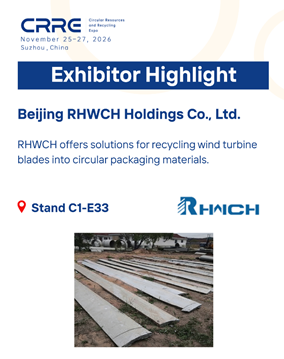
About RHWCH
RHWCH was established in November 2021 and is headquartered in Beijing. The company provides master strategic planning and comprehensive positioning across the entire value chain—from the recovery and upcycling of decommissioned wind turbine blades to the manufacturing of circular packaging.
Through a collaborative framework, RHWCH seamlessly synchronizes environmental protection, advanced technology, and circular economies with diverse downstream industries.
About CRRE
CRRE is positioned as a national-level platform, with deep integration across the whole chain and broad international collaboration. It adopts a “summit forum + physical exhibition” dual-engine model. It is committed to building the first five-in-one super hub for resource-circulation in the Asia-Pacific region, covering: recycling – reprocessing – high-value applications – green finance – international rules.